
Table of Contents
Introduction
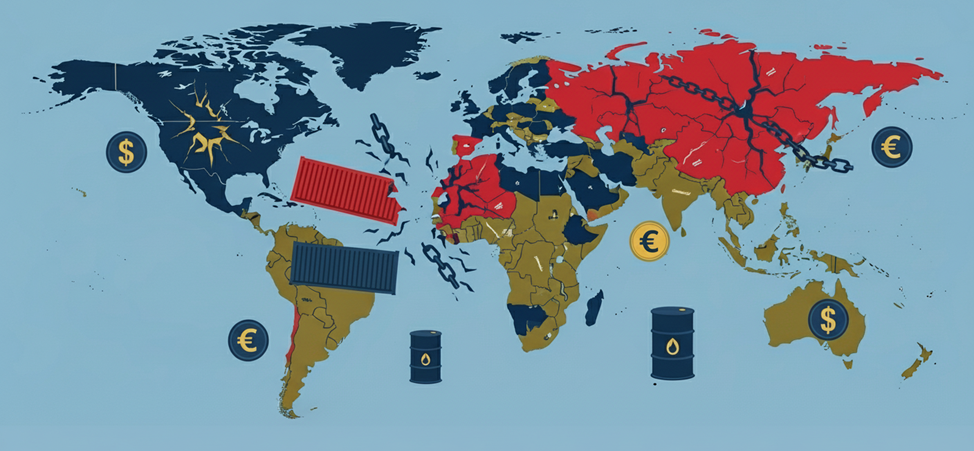
Economic sanctions have now turned out to be one of the most commonly employed instruments of statecraft in the twenty first century. Since the early 20th century sanctions have been used in response to aggression, as a way to prevent nuclear proliferation, curb human rights abuses and force adherence to international standards, by targeting individuals, or imposing trade embargoes on whole economies. They have been called as having been used as an alternative to war – a method of putting pressure without drawing a gun. However, their real effectiveness is hotly contested and unintended consequences can sometimes have far reaching after-effects. To make sense of the politics of sanctions, one needs to examine the nature of their imposition, the process involving their application and their consequences.
Emerging as an instrument of policy, The Rise of Sanctions.
The cessation of the Cold War was also accompanied by the explosion in the application of sanctions. As the UN Security Council was less often crippled by the rivalry of the superpowers, the regimes of multilateral sanctions multiplied. Western nations, particularly the United States and the European Union started relying on economic sanctions to solve problems such as financing terrorism and environmental offences. Sanctions have developed over the years to be less extensive, in the sense of not covering an entire population with sanctions, and can be focused on elites, banks, companies or a particular commodity. These tools were particularly strong with financial globalization. The ability to regulate the dollar and to access the key banking systems enabled Washington and its allies to extend into foreign jurisdictions, and hence, non-compliance cost would be expensive even to third parties.
Mechanisms of Influence
The sanctions are executed both economically and politically. On the economic front, they increase the cost of doing business, interfere with supply chains, halt access to capital and technology and reduce markets. Politically, they are indicative of disapproval, they stigmatize regimes, undermine ruling coalitions and encourage domestic opposition. Theoretically, this pressure compels the target to alter its behavior to be back into a legitimate position of economic access. But the effectiveness of sanctions is highly variable: how economically resilient is the target, are there other markets which they may turn to, how united is the sanctioning coalition, and how clear is the demands they are making. In the absence of these elements, sanctions may be just symbolic actions instead of leverage.
Debating Effectiveness
The history of sanctions is fairly ambiguous. In other instances they have led to major policy changes e.g. coercing Iran into signing the 2015 nuclear deal or urging South Africa out of apartheid. In most other cases, though, regimes have survived years of circumscription without reform. Extensive embargoes of Cuba and North Korea have failed to achieve democratic change; massive sanctions on Iraq in the 1990s killed the people but Saddam Hussein remained in power until he was forced out by war. Sanctions tend to strengthen the will of a target government and enable the leadership to turn people against external adversaries as the main cause of financial damage. Even in cases where they do, they are more often than not slow and the effect of sanctions are difficult to separate out of other causes like internal political change or a change in the security environment.

Unanticipated Economic Consequences.
Sanctions are almost invariably costly to the common folks. Inflation, unemployment and a lack of the basic products may increase drastically. Even selective actions can have the general effects since business and banks will over comply to evade the risk of legal consequences. This chilling effect has the ability to cut off humanitarian assistance, medication supply and remittances. There are black markets and smuggling rings which have thrived in certain nations enriching criminal gangs and crooked officials. In the long run, sanctions may pervert an economy, either into autarky or that of an even more evident reliance on other patrons. The shift in Russia to China in 2014 in the wake of Western sanctions is an excellent case of how sanctions can shift trade and finance unexpectedly.
Political, Diplomatic Blowback.
Diplomatic challenges are also created by the politics of sanctions. General actions have the potential to marginalize partners who incur economic damages or those that perceive sanctions as the highhanded action of one country. When sanctions bear no fruits, fatigue can develop and undermine the cohesion of the coalition. The targeted countries can counter-sanction, or resort to cyberattack or alliances. To the extent that sanctions are selective or look political, they deviate against the very norms they are supposed to promote in certain situations. To illustrate, critics state that mighty states are not prone to sanctions despite their breach of international law, and this aspect creates the impression of two-sidedness. This undermines the effectiveness of the whole sanctions regime and makes it more difficult to cooperate later.
Adaptation and Sanctions Evasion.
The other accidental outcome is that targets would learn to adapt. Governments put money into home industries, establish alternative ways of payment, establish new trade lines and foster relationship with like-minded allies. Gradually such adaptations may render sanctions less efficient and even promote authoritarian rule, by fostering economic nationalism and self-sufficiency. Technology is a factor as well: cryptocurrencies, shadow banking and offshore networks provide approved players with novel methods to transfer money and obtain limited goods. The further sanctions continue the more advanced the means of evasion evolves and in turn more advanced measures of sanctioning states are developed leading to a spiraling of enforcement and circumvention.
The Coercion vs Humanitarian Concerns.
Ethical responsibility has become a debatable issue concerning humanitarian effects of sanctions. Collective punishment is forbidden by international law, but wide-ranging sanctions may well be experienced by the target populations as such. This strain has given rise to inventions like humanitarian exemptions, licensing systems and white lists of what can be imported. However, these security measures are difficult to put in place. Aid organizations might find it hard to balance legal mandates, banks might decline to accept even legal transactions, governments may seek to exploit exemptions and get political favors. One of the biggest problems in the development of effective sanctions policy is therefore balancing coercion and compassion.
Prospects and Alternatives.
Global power and technology are on the move and will determine the future of sanctions. Multi-polarity complicates the ability to put together large coalitions and digital finance weakens conventional choke points. Freezing of assets, export of strategic technologies and banning of elite travel are likely precision tools that sanctioning states will depend more on. Meanwhile, there is an increasing focus on positive inducements i.e. in the provision of incentives instead of punishments or balancing sanctions with diplomatic interaction to develop explicit off-ramps. Clear objectives, regular reviews and consultation with humanitarian actors can enhance results. Finally, sanctions are not a silver bullet and a mere gesture. They are a part of a broader instrument of foreign-policy that relies upon a delicate balancing act and the legitimacy of diplomacy.
Conclusion
Sanctions reflect the irony of contemporary statecraft: they are offered and justified as a non-violent method of influence, yet tend to cause damage and stir reaction. They only work in context, design and implementation and the capacity of the sanctioning states to balance Pressure and Diplomacy. The negative effects, which were not planned to happen though, such as economic sufferings of people, increased authoritarianism, and diplomatic repercussions and evasion of sanctions, are demonstrating the boundaries of coercion in the globalized world. To policymakers, the dilemma is not whether to sanction or not but how to design sanctions in a manner that they can be ethical, international and truly behavior change not just an indicator of disapproval. The politics of sanctions, however, cannot be reduced to mere success or failure, but to seeing their multifaceted nature in the international relations and their trade-offs to everyone whose interests are at stake.

